
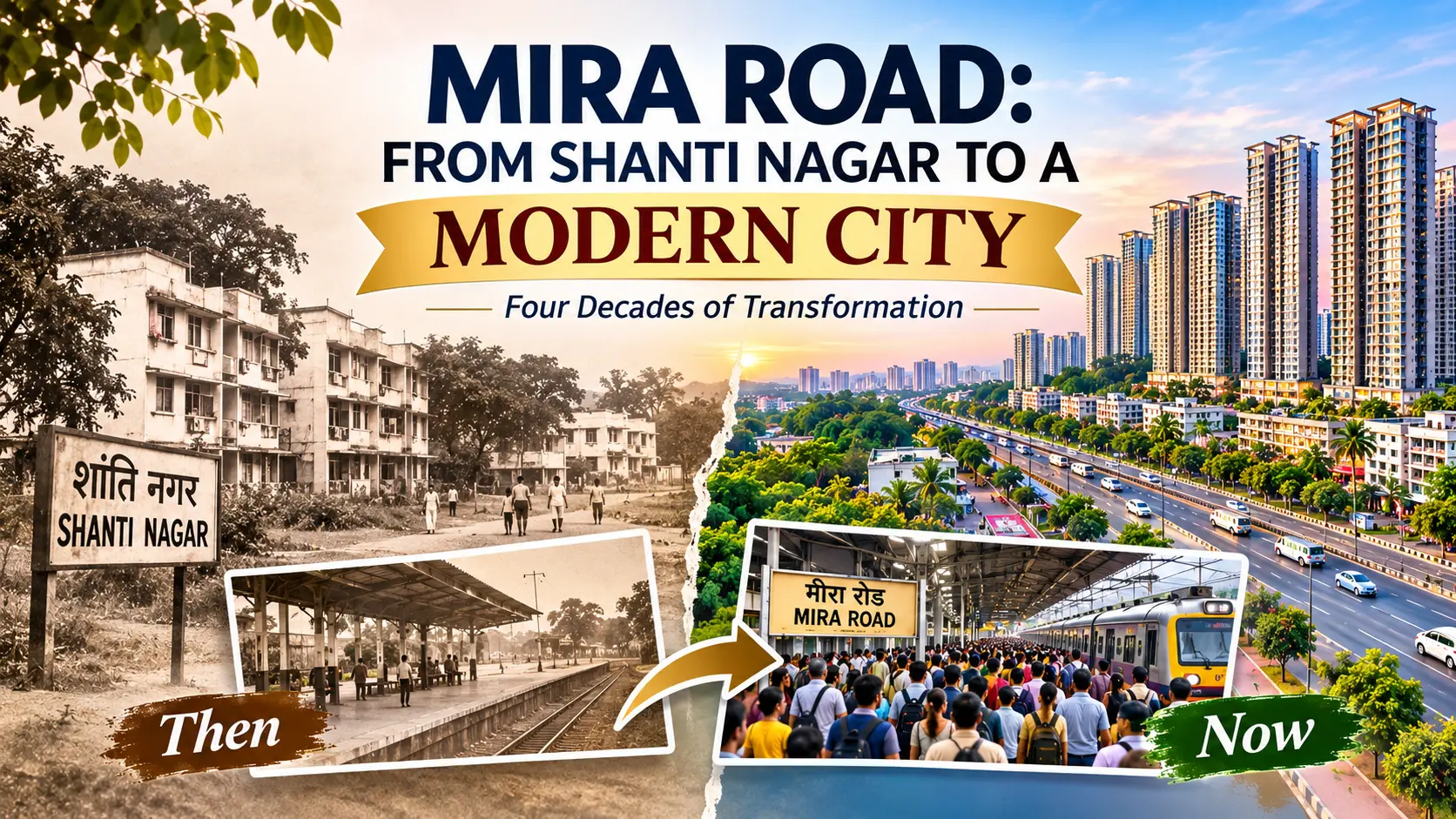
MIRA ROAD: FROM SHANTI NAGAR TO A MODERN CITY

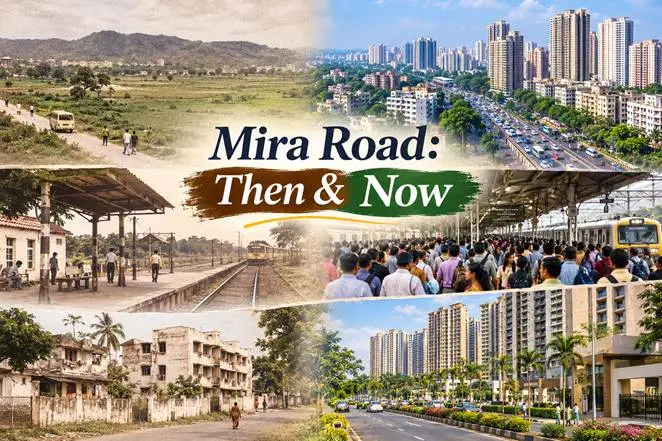
MIRA ROAD: FROM SHANTI NAGAR TO A MODERN CITY
Four decades of crowds, concrete towers, changing home prices and the people who witnessed it all
A long-form, story-led real-estate and community history article with a 25-topic index, builder and project links, and a visual storyboard.
INDEX — 25 topics
1. The Mira Road we remember
2. Four old friends return after decades
3. The railway station: from quieter platforms to crowded trains
4. The local train as a lifeline to Mumbai
5. Open land and long views towards Dahisar Check Naka
6. From fields and low-rise buildings to a concrete skyline
7. Shanti Nagar: a landmark chapter in residential growth
8. The early developers and the first big housing communities
9. AsmitA: the 1980s and the changing residential landscape
10. Kanakia Beverly Park: the township-style development model
11. MHADA and the role of public housing
12. The 1990s: roads, schools, shops and a growing population
13. The 2000s: Mira Road becomes a more established suburb
14. From ₹2–5 lakh memories to homes priced in crores
15. How the idea of a good home has changed
16. From basic facilities to lifestyle amenities
17. Population growth and the pressure on infrastructure
18. Road congestion, parking and the everyday commute
19. Shopping, schools, healthcare and community life
20. New-age projects: high-rises, gated communities and amenities
21. Current builders and projects to research
22. Who benefits from rising property values—and who struggles?
23. Redevelopment, affordability and the next generation
24. What should Mira Road look like in the next 20 years?
1. The Mira Road we remember
“Do you remember the Mira Road we first knew?” Joseph asked as he met his old friends Francis, Mahesh and Peter near the station. “It was quieter, there were fewer buildings, and a home here felt within reach for an ordinary working family.”
The four friends had seen Mira Road at different stages of their lives. They remembered open stretches, familiar local shops, simpler residential buildings and the daily routine of catching a train to work. They also remembered the optimism: buying a home outside the most expensive parts of Mumbai seemed like a practical way to build a future.
Today, the suburb looks very different. High-rise buildings dominate many views, the population is much larger, local trains can be extremely crowded at peak hours, and home prices have risen substantially. This is not just a real-estate story. It is a story about people, commuting, family budgets and the changing meaning of an affordable home.
2. Four old friends return after decades
The friends decided to revisit the places that had shaped their lives. They would begin at the station, travel towards Dahisar Check Naka, pass through older residential neighbourhoods and finish by looking at some of the newer towers.
“We should not say everything was better in the old days,” Francis said. “There were fewer facilities. We wanted schools, shops, roads and better homes. But we should also ask whether infrastructure grew at the same pace as the population.”
That became the theme of their journey: celebrate what has improved, remember what has disappeared, and ask what the next phase of growth should deliver.
3. The railway station: from quieter platforms to crowded trains

AI-generated illustration of a quieter station scene contrasted with a modern crowded platform; not archival photography.
At the station, the friends watched commuters moving towards the platforms. A local train arrived and people gathered at the doors.
“I remember being able to wait on the platform and sometimes get a seat if we timed it right,” Peter said. “Now, at peak times, even getting into the train can be a struggle.”
Crowding varies by time, service and day, and individual memories are not passenger-count statistics. Still, the contrast captures a common concern among residents: as Mira Road has grown, the daily commute has become a central part of the quality-of-life debate.
The railway helped make the suburb practical for people working elsewhere in Mumbai. But housing growth and commuter demand must be considered alongside train capacity, station access, safe pedestrian movement and connections to buses and other local transport.
4. The local train as a lifeline to Mumbai
For many households, a home in Mira Road was a compromise that made sense: more space or a more manageable purchase price than some locations closer to work, in exchange for a daily commute. Over the years, that decision shaped routines, family schedules and the suburb’s identity.
“Our homes were here, but our working lives often started somewhere else,” Mahesh said. “We learned to plan everything around the train.”
The true cost of a home is therefore not only its purchase price. It also includes travel time, fares, last-mile transport, the effort of travelling during peak hours and the effect of commuting on family life.
5. Open land and long views towards Dahisar Check Naka
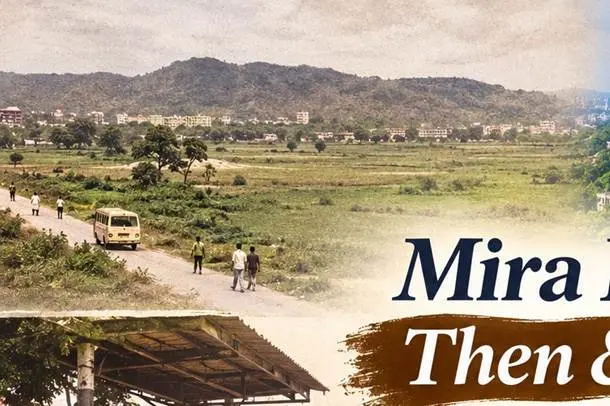
AI-generated landscape illustration representing an earlier, less built-up visual; not a verified historical view of Dahisar Check Naka.
On the drive towards Dahisar Check Naka, Mahesh pointed towards the skyline. “I remember when you could look across much more open land. Now towers seem to fill every available view.”
The landscape has changed through residential construction, roads, commercial activity and the growth of neighbouring areas. A useful historical comparison would pair a dated photograph from the same vantage point with a recent image. The caption should identify the actual year and location rather than simply calling an image ‘old Mira Road.’
The contrast is powerful because it shows the physical scale of urban change. Yet a skyline photograph alone cannot explain every cause: land ownership, development plans, infrastructure, demand and individual project decisions all play a part.
6. From fields and low-rise buildings to a concrete skyline
The modern skyline reflects the demand for homes in the wider Mumbai region and the shift towards vertical development. New towers can accommodate many households on a smaller land footprint, but higher density also increases the importance of roads, water, drainage, open spaces, public transport and emergency access.
“A building can be beautiful inside its gate,” Joseph said, “but residents still have to use the road outside it.”
Mira Road’s next chapter should be judged not only by the height of its towers but also by the quality of the neighbourhoods around them.
7. Shanti Nagar: a landmark chapter in residential growth
Shanti Nagar is an important part of the suburb’s residential history. Shanti Group’s own legacy page describes Shanti Nagar as its flagship project and recounts work on water-supply infrastructure and community institutions. These are useful first-person developer sources, and should be attributed as such.
Read: Shanti Group — Our Legacy / Shanti Nagar
The larger lesson is that housing is more than construction. Communities need water, schools, places of worship, shops, transport and shared spaces. Older residents can make this chapter richer by contributing dated photographs, old brochures and first-hand memories.
8. The early developers and the first big housing communities
Mira Road was not built by one company alone. Its growth involved private builders, public housing agencies, landowners, residents, civic authorities and local businesses. Some developers describe their own contribution to roads, water or social infrastructure; such claims should be clearly attributed and, where possible, checked against municipal records.
When creating a timeline, separate three dates: the company’s founding, the launch of its first Mira Road project, and the completion or occupation of that project. They are not necessarily the same.
9. AsmitA: the 1980s and the changing residential landscape
AsmitA Group’s official history says the group was founded in 1985 and describes its founder’s role in Mira Road’s development. Its affiliated realty website also provides a company timeline. These are relevant sources for researching the early residential era, although independent records should be used to corroborate individual project dates.
Company history: AsmitA Group — History
Realty history: AsmitA India Realty — History of Mira Road
A strong historical feature could include a former resident describing the first building they remember, the facilities available at the time and how daily life changed as more families arrived.
10. Kanakia Beverly Park: the township-style development model
Kanakia Group’s official journey describes starting a township project in Mira Road that included residential buildings and facilities such as a mall, school, college, multiplex and shopping centres, and later records the completion of Beverly Park. This makes it a useful case study of development that combines housing with other uses.
Developer timeline: Kanakia Group — Our Journey
The broader shift towards integrated or amenity-led developments changed what buyers could expect from a residential project. At the same time, residents still depend on public roads, public transport and civic services beyond the project boundary.
11. MHADA and the role of public housing
Public housing is another part of Mira Road’s development story. MHADA’s official website lists a residential scheme in Mira Road (East) with EWS and LIG homes, and gives a stipulated completion date. This provides a documented public-sector reference point alongside private developments.
Official source: MHADA — Mira Road residential project
Including public housing makes the article more balanced. The history of a suburb should include not only premium projects but also the ways different income groups have been accommodated.
12. The 1990s: roads, schools, shops and a growing population
As more families settled in Mira Road, demand grew for everyday services: grocery stores, schools, healthcare, places of worship, restaurants and local businesses. A residential area becomes a town through these connections, not only through the number of flats it contains.
The friends remembered how local businesses that began small became familiar landmarks. Some facilities arrived through developers; others were created by entrepreneurs, institutions and public authorities.
13. The 2000s: Mira Road becomes a more established suburb
A 2005 Times of India report described Mira Road as an increasingly attractive location, referring to schools, malls, connectivity and different kinds of housing. It is a useful snapshot of how the area was being presented at that time.
Historical news report: The Times of India — Advantage Mira Road! (2005)
The report should be read as a dated account, not a complete history. Pair it with municipal plans, dated photographs and residents’ interviews to show how the suburb changed over time.
14. From ₹2–5 lakh memories to homes priced in crores
Over tea, the friends compared what they remembered paying for a home. “Some flats were around ₹2 lakh to ₹5 lakh in the days we were looking,” Joseph said. “Now, depending on the building and configuration, buyers can be looking at prices in crores.”
This is a compelling contrast, but the old range should be presented as a resident recollection unless supported by dated sale agreements, advertisements or brochures. There was never one price for every flat in Mira Road, and current prices vary by carpet area, location, building age, amenities, title, condition and market timing.
For long-term owners, rising values may mean substantial appreciation on paper. For first-time buyers, they can mean a larger down payment, a longer mortgage and a greater portion of monthly income committed to housing.
“We worked hard to buy a home,” Francis said. “The young people are working hard too. The question is whether the same dream is still within their reach.”
15. How the idea of a good home has changed
Earlier homebuyers often prioritised purchase price, basic services, transport and a safe neighbourhood. Today, buyers may also compare layouts, natural light, usable carpet area, parking, security, maintenance costs, work-from-home space and project amenities.
These are different needs rather than proof that one generation made better choices. The right home depends on a household’s budget, life stage and commute.
16. From basic facilities to lifestyle amenities
AI-generated illustration of modern residential towers; not a photograph of a named development.
Contemporary projects may offer clubhouses, landscaped gardens, gyms, pools, children’s play areas and controlled access. Such amenities can improve convenience, but buyers should check what is actually included, what is shared, what maintenance costs apply and whether the facilities are completed.
A brochure’s render is not proof of delivery. Check the project’s MahaRERA registration, declared completion schedule and documents before making a decision.
17. Population growth and pressure on infrastructure
The Mira-Bhayandar Municipal Corporation says the municipality was established on 12 June 1985 and later upgraded to a municipal corporation on 28 February 2002. Its public information also notes that population growth places pressure on civic services and infrastructure.
Official civic history: Mira-Bhayandar Municipal Corporation — About Us
Development planning: MBMC — Town Planning
These records are useful anchors for the timeline. The article should distinguish documented municipal milestones from personal recollections about the look and feel of earlier Mira Road.
18. Road congestion, parking and the everyday commute
As housing density rises, road space and parking become everyday concerns. The impact is felt by commuters, schoolchildren, senior citizens, delivery workers, shopkeepers and emergency services.
The friends agreed that growth should be accompanied by coordinated planning. A new building may solve the housing need of its residents, but the area around it must also support safe movement and essential services.
19. Shopping, schools, healthcare and community life
Mira Road’s growth also created a more extensive ecosystem of shops, schools, clinics, hospitals, restaurants, places of worship and community organisations. These services are part of why residents choose to remain in the area even as the skyline changes.
The history should include these everyday landmarks, especially when old residents can provide reliable dates, photographs or stories. A shop or school that has served the community for decades can be as important to the local story as a large tower.
20. New-age projects: high-rises, gated communities and amenities
Today’s project landscape includes high-rise developments and amenity-focused residential schemes. The projects listed below are examples to investigate, not a ranking of builders or a claim that each one contributed to the suburb’s earliest development.
Aaradhya Parkwood by MICL is a contemporary project promoted around residential living near Dahisar Check Naka. Check the official project page and MahaRERA entry for current details and status.
MICL official website: MICL Group
JP Infra is another current developer whose official website can be used to identify projects and verify their exact location.
JP Infra official website: JP Infra
For each project, record the exact project name, address, MahaRERA number, launch date, declared possession date and status. Do not infer these details from a general corporate website.
21. Current builders and projects to research
Shanti Group — Shanti Nagar: Historic residential chapter; use the company’s own legacy page and corroborate specific dates. Official / source link
AsmitA Group — history: Developer’s history and stated founding date. Official / source link
AsmitA India Realty — Mira Road history: Company-authored local history. Official / source link
Kanakia Group — Beverly Park / journey: Company timeline describes the Mira Road township project and Beverly Park. Official / source link
MHADA — Mira Road residential scheme: Official public housing scheme listing. Official / source link
MICL Group — Aaradhya Parkwood research: Use the current official website and project-specific disclosures. Official / source link
JP Infra — current projects: Use the project pages to verify the precise Mira Road / nearby location. Official / source link
Mira-Bhayandar Municipal Corporation: Civic history, development plans and municipal information. Official / source link
MahaRERA: Verify project registrations, promoters and declared project details. Official / source link
Important: the list is intentionally a research directory, not a complete list of every builder active in Mira Road. Some present-day developers may be active in the wider Mira-Bhayandar region or in nearby locations. Confirm the project address before describing a development as being in Mira Road.
22. Who benefits from rising property values—and who struggles?
The same market can create very different outcomes. Existing homeowners may benefit from higher resale values, while new buyers face a larger financial barrier. Landowners and developers may see opportunities, while residents may worry about density and pressure on shared infrastructure.
A fair article should avoid treating property appreciation as a universal benefit. A home is an asset, but it is also a place to live. The social value of development includes whether different kinds of households can find suitable homes and whether public services remain accessible.
23. Redevelopment, affordability and the next generation
Redevelopment can improve ageing buildings and provide modern facilities, but residents need to examine developer credentials, written agreements, approvals, temporary accommodation terms, timelines and the consequences of delays. It is not automatically the best choice for every society.
Affordability also requires more than looking at the headline price. Buyers should calculate the down payment, stamp duty, registration, loan interest, maintenance, parking and expected commuting costs. The best decision is one that remains manageable over time.
24. What should Mira Road look like in the next 20 years?
The four friends ended their journey by looking at the towers they had watched rise over the years.
“We wanted Mira Road to grow,” Joseph said. “And it has grown beyond what we imagined. But the next stage should make life easier—not just add more buildings.”
Their hopes were simple: reliable transport, safer pedestrian routes, better roads and drainage, well-maintained public spaces, schools and healthcare that keep pace with population, and homes that younger families can realistically afford.
Mira Road’s next transformation should be measured not only by towers and prices but also by the quality of everyday life. The suburb is made by its people as much as by its buildings.
Key historical and official sources
News insight
 Oct 26, 2026
Where Have Mumbai’s 1 BHK and 1 RK Flats Gone? Why Affordable Homes Are Becoming Harder to Find in 2026 By Shine Properties | Your Real Estate Consultant in Mira Road
Is Mumbai Building Homes That Ordinary Buyers Can Afford?For generations, owning a home in Mumbai...
 Oct 20, 2026
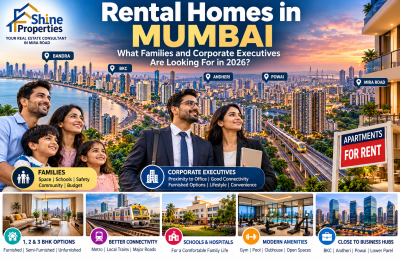
Rental Homes in Mumbai: Where Should Families and Corporate Executives Live in 2026?
Looking for a rental flat in Mumbai? Whether you are moving with your family, relocating for a new j...
 Oct 20, 2026
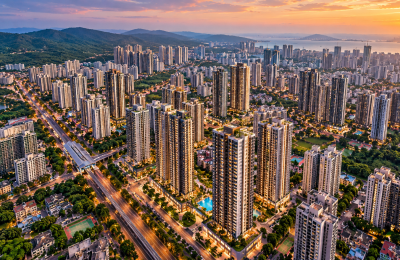
10 New Luxury Residential Projects in Mira Road, Mumbai
Mira Road has developed into an important residential destination in the northern Mumbai Metropolita...